BizGrowMojo Episode 10 – Brand Strategist Asia Dore
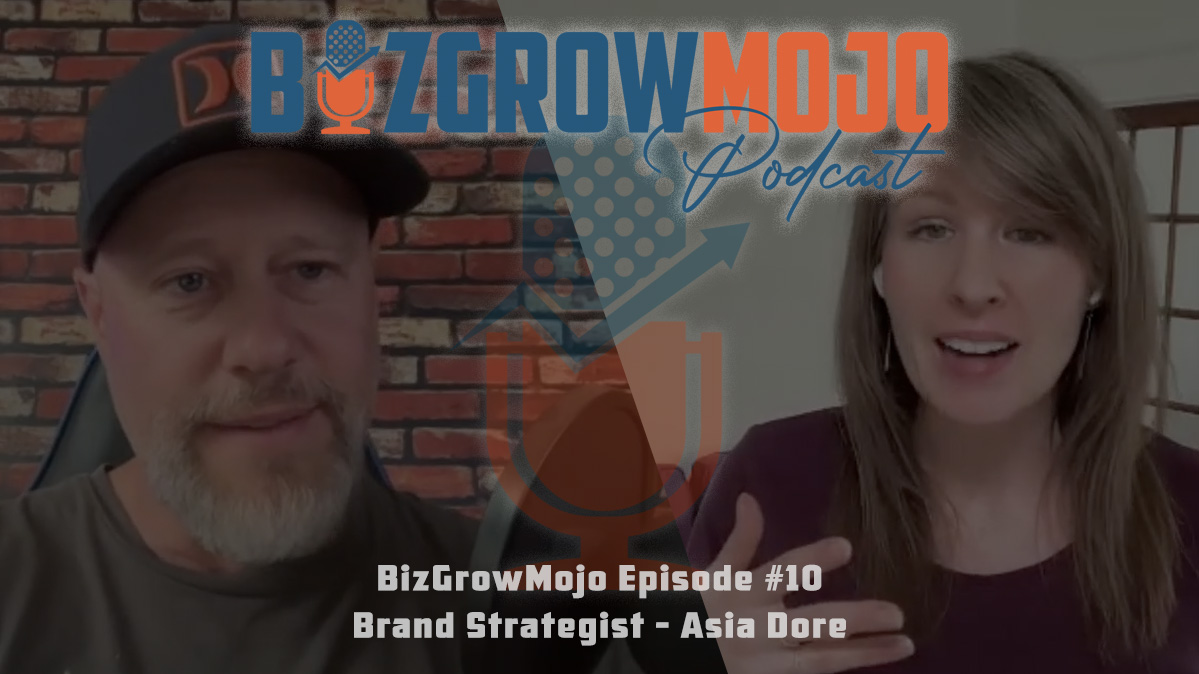
From Photographer to Brand Strategist: Asia Door’s Journey to Helping Entrepreneurs Position Themselves as Experts
A conversation about building authentic brands, ditching social media chaos, and trusting the entrepreneurial process
The Challenge Every Expert Faces
Being an expert in what you do is one thing. Getting other people to recognize your expertise, that’s a completely different challenge. Today, we’re talking with Asia Door, a brand strategist who helps entrepreneurs position themselves as thought leaders through what she calls the strategy audacity method. Asia breaks down why most business owners struggle to articulate their value and the critical difference between being strategic and being audacious with your brand.
We discuss everything from the crucial role her website plays in her business to discovering that podcast guesting beats Instagram any day of the week. Asia shares the unfiltered truth about building a brand that actually reflects who you are and what you’re capable of.
If you’ve ever felt like your expertise gets lost in translation when you try to explain what you do, this conversation will change how you think about your brand. Let’s jump in. Good morning.
Hi Ryan. How are you? No. How are you?
I’m good. How about yourself? I’m good too. I’m excited to do this today.
Awesome. Yeah. Well, let’s just hop right into it then. Uh, yeah, I’m looking forward to getting into the weeds about your business and, you know, what it does and what you do. So, why don’t you just start by telling us a little bit about who you are and what your business does?
Sure. Um, I’m Asia Dore. I am a brand strategist. And what I really do is help entrepreneurs build brands that position them as experts. Because it is one thing for you to know you’re really damn good at what you do, but it is completely another to be able to articulate it in a way that other people understand.
Yeah, absolutely. So, how do you kind of go about doing that? Tell us a little bit more about that.
The Strategy Audacity Method: Why You Need Both
[5:00]
Yeah. So I use uh my strategy audacity method which was forged out of the observation that entrepreneurs typically build their brands in one of two ways.
Either they are super strategic where they have they do everything by the box. They stick to their brand guidelines. Nothing strays without the con with outside sorry of the confines of um what they believe their brand to be. Um, which is great because it’s is super strategic with brand strategy. You need to have the strategy part. Um, the other way that I saw people build their brands was by being completely audacious. And by that I mean they were just sharing whatever they wanted whenever they wanted. Um, they were mixing in a lot of their personal life or their political opinions or what they did that day. Um, sometimes they’d talk about their offers but not really in a consistent way. Um, so it just didn’t really make a lot of sense in terms of building a brand that other people understood. And so what I realized is that you really need both. You need the strategy and you also need the audacity. So this is um, you know, it’s my method, but it’s also really kind of just my overall philosophy on what I do, but I found that it’s also kind of bleeding into my real life, too, in terms of like just the the world view. um that I use to operate in the world. Um so there’s five pillars in my signature method. Do you want me to go through those?
Sure. Yeah. And I just was going to say it’s interesting that you say that because I feel like I see so many people that are doing really well, you know, growing, you know, a large presence, you know, social presence and things like that that are kind of doing the things that you’re talking about. They’re kind of blending those two things together really well. So yeah. Yeah. Hop right into that. like break that down for us if you would.
The Five Pillars: Vision, Catalyst, Client, Soul, and Message
Sure. Um, so we start out with the vision, which is basically just figuring out what it is that you’re actually trying to do here. Like what are you trying to accomplish with your business beyond just profit? What kind of impact do you want to make? What kind of problem do you want to solve? Um, what kind of gaps do you want to fill? And then we move on to step two, which is the catalyst, which is you, right? The entrepreneur, the person. We decide how all of your skills and knowledge and experience, all of the stuff that makes you an expert, how it all um adds up and blends together in order to form a really definitive expertise that makes you qualified to create the impact that you want to make. After that, we move on to the client. Um, and yes, I am talking about the ideal client. I’m sorry. I know everybody hates doing ideal client work, but it’s so critical because our brands aren’t for us. They’re for our ideal clients. You know this. I’m sure you’ve had issues with your clients where they’re like, “I don’t know. We just want to help everybody.” It’s like, “No, you got to be specific.”
Yeah. Exactly. Help everybody, help nobody, right?
Exactly. Um, so we have to determine who’s going to benefit the most from your expertise and why they’re going to care about the work you do. um and how the impact that you want to make is going to affect them in their day-to-day lives. And then after that, we move on to the soul of your business, which is really, I think, especially as entrepreneurs, is is your soul. Um how do we imsh that with your your brand and your business? How do we refine your real personality and your beliefs and your ideals into a really cohesive identity that isn’t um a manufactured identity? Right? It’s all very genuine, but it’s it’s cohesive in that it allows you to be strategic, but it also allows you to be a real human um and not just a business because people aren’t going to connect with a business, they’re going to connect with a person. Um, and then lastly, we just package all of that up into a really clear and concise message that um allows you to show up frequently and also consistently and really just say the same thing over and over and over and over and over again um in fresh new ways so that you are being consistent with what you’re saying, but you’re also um you’re not going to bore your audience because you are saying it in fresh new ways.
Okay. Okay. Yeah. No, that that makes sense. Um, so what type of businesses um are kind of your ideal clients? Like who you typically work with? Who’s a good fit for your services?
I typically work with um coaches and consultants and online service providers who are they still very much want to provide their service, but they also are kind of at a point where they really are experts. And so they want to be sought after and recognized not only for being really good at the technical service they provide, but also for their ideas and their perspectives and their thinking outside of the box um methods and frameworks. You know, they they are doing something different and they they would like to be recognized for that.
Foundation First: Why Marketing Fails Without Strategy
[10:00]
Okay. Now, so do you help people kind of do, you know, all these things through social media, through their website, combination of both, maybe something else, other channels. Tell us a little bit more about how that works.
Yeah, it completely depends on the client. The work that I do with my clients is the really foundational stuff. So, I don’t typically um I don’t typically help my clients implement their brand strategy. It’s something that I can do and that I have done before. It depends on the client, but I have found that my clients are typically really independent and they just want to like they want help figuring all the stuff out. They want help finding the cohesion and then once it’s clear in their mind, they’re like, “Okay, I’m good. See you later.” I’m like, “Godspeed.” Like, “Go get it.”
It’s more like the foundational work, like getting that foundation in place so they actually kind of know where they need to go and, you know, what they need to implement more. So, exactly. like all the marketing is so important, but if you don’t know what you want to say and if you don’t know who you’re talking to and if you don’t know why you’re different, if you don’t know these things, like at a very core inherent level, it’s going to make your marketing feel really scattered and you’re going to be confused and your audience is going to be confused.
Yeah. Yeah. So important to get some of these things nailed down so that you have the direction to guide all the rest of the marketing because Yeah. I’ve seen that happen before where people are like, “Okay, I’m ready to like, you know, implement a digital strategy. I want to do SEO. I want to do, you know, digital ads and all these things.” And, you know, we kind of have to go back to the drawing board and and, you know, try to uncover some of these things that you’re, you know, helping people do because it’s like, well, we need to have, you know, the direction of where this needs to go. We need the foundational, you know, what you stand for type of things built into this so that we can, you know, take this in a direction that’s successful and not just, you know, scattered like you said.
It’s going to make your marketing efforts so much more effective. Um, and it’s also it’s it’s going to make it more worth the invest investment of time and money and energy because you’re not just going to it’s wild how many business owners well I shouldn’t say it’s wild. It’s understandable how many people just think they have a marketing problem. Like, oh, we just need to market more. We just need more clients. Like, that’s our problem. When really, it’s often like there’s a deeper rooted problem that we need to figure out first and then move on to the marketing. But it’s also understandable like when you start a business, you have to not only be really really good at the skill you have or the service you’re providing, but you also then have to be good at the skill of being a business owner, which is often completely different. So, it is very understandable.
Yeah, it it is. I think so many people, you know, have the skill down. Um, but then when they start a business, they’re just getting started learning how to be a business owner, which like you said, it is understandable, but yeah, it’s just that fundamental foundational work that’s got to get done. And you can either, you know, work on that hard up front or learn a lot of painful lessons and drag it out for a very long time and then realize that you need to come back to the drawing board and figure it out, you know.
The Accidental Entrepreneur: From Photography to Strategy
[15:00]
Um, so let’s let’s take a little bit of a step back and tell me how you kind of were inspired to start this business to begin with.
Um, it was kind of an accident to be completely honest. I did not grow up thinking I was going to be an entrepreneur. I certainly didn’t grow up thinking I was going to be a brand strategist by any means. Um, I started my business as a photographer originally in 2014, so over a decade ago. And um that was by accident too. I got a camera. I started posting my pictures. People started asking, “How much do you charge for pictures?” A light bulb went off in my brain like, “Oh, this could be a thing. This could be a thing. I could be my own boss.” Um and then I I moved into brand photography and I realized very quickly that even though all of these clients were so brilliant at what they did, when I asked them to explain their brand to me so I could photograph for it, they had no idea what to say. they had no idea what their brand actually was. So the strategy piece became a really crucial part of my work as a brand photographer. And then in 2020 I realized actually the strategy part is the most fun for me. Like that’s the stuff that really gets me excited. So I dropped the photography alto together and then um have just been focusing on the strategy ever since. So um was I was not inspired. I just followed the curiosity breadcrumbs and it led me down the right path.
That’s awesome though. I mean, it’s great to figure out what that is that really, you know, gets you excited every day and be able to focus on that because everything is so much easier once you figure that out.
It is. Yeah. And I I’m very lucky to be passionate about the work that I do and it that makes it more fulfilling. For sure. Absolutely. Absolutely. Was there kind of like an aha moment that was like, okay, like this is this is what I need to be doing. You know, that when you realize kind of what inspires you, was there, you know, that moment that it’s like, okay, like this is the path. Like this is what I need to be doing.
Oh man, I I don’t know that there was a specific aha moment that would make such a better story if there was. Um, but to be honest, I I think it was just the slow evolution. Um, I Okay, I guess I guess if I were to say there was an aha moment, I think it was probably the moment that I admitted to myself it was time to pivot away from photography, which was really really difficult for me to do because I had built my entire business on the service of photography, a successful business. And so, not only was it scary to do something new, but I also felt a little bit like I was abandoning um all of the work that I had done, all of the progress I’d made, all of the foundation that I had built. And of course, that’s not true. There’s so much that I brought with me into what I’m doing now. But at the time, it almost felt like I was abandoning part of myself, like part of my identity. Um, so if there was an aha moment, I think it was when I just decided like, Asia, you got to do this. It’s like you got to try this new thing. Um it’s okay, right? Let go of of all the stuff that you’ve built. You’re not abandoning it. You’re just doing something different and that’s okay.
Yeah, it it can be really hard when you have a lot of time invested and you feel like you’re leaving it all behind to do something else. Even if you are excited about I totally understand where you’re coming from. I mean, did you go through that when you switched from like your this big agency that you had grown and now you’re doing something different?
Not really. you know, I I’ve wanted to kind of do my own thing for a long time and yeah, it just was it was the time that it needed to happen, you know, so I it’s kind of been I’ve been preparing for it for, you know, quite a while, building a strategy and and that sort of thing. Um, so, you know, it was it was just the time and it, you know, things kind of fell into place to make it work at the time. You know, it could have been longer down the road, but um, you know, I’m thankful for, you know, how it happened and, um, you know, it was it was just time. So yeah, you know, it was I didn’t feel like I was leaving anything behind because I felt like everything that I have done up to that point led me to that and kind of built what I’m doing. So yeah, but yeah, I totally understand where you’re coming from with um you know, if you feel like you’re you’re abandoning because I have, you know, taken on other things before where I’ve invested time and I’m like this doesn’t excite me. you know, I I’m I’m very I have a short attention span for certain things that I’ll be excited about a project and then once I kind of get to the point where I’m ready to do something with it, I’m like, you know what? Like, I’m done with this already. So, I’m bagging that, you know, and that’s definitely not the
Yeah. You’re like, next, I’ve been doing this for so long and I just can’t really imagine not doing marketing, you know. So, that’s kind of the the difference, you know, some of those things versus what you truly enjoy doing, I think.
The Business Model: One-on-One Work That Actually Makes Sense
[20:00]
Sure. Um, so tell me like how does your business actually, you know, make money? How do you charge like a flat fee? Do you charge um an hourly rate? Um, yeah. Packages. How does that work for you?
Yeah, I mostly right now just focusing on onetoone work. Um, I spent a lot of time last year um trying to like build out this product suite with a bunch of, you know, digital products and courses and making it really complicated. And I learned uh towards the end of the year like why are you doing this? Like you’re just doing this to do this. You like working onetoone with people. Um let’s just try that for a while. So that’s what I I focus on right now. Um I have an offer called the brand cohesion lab where we figure out all the things um that we t talked about when I was explaining my signature method. Um and yet just really get that brand strategy guideline set like in solid stone. Um, so that’s sort of my my signature offer. That’s what I’m I like to be doing right now. Um, and then I have some other smaller one-to-one offers for, you know, specifically figuring out content or specifically figuring out messaging or um, even like an elevator pitch, things like that. And I do have a few products as well, but definitely focusing on the onetoone work. Um, and I I don’t charge by the hour. I I like a flat rate because it means everybody knows um what to expect. This is exactly what’s included and this is exactly how much time it’ll take and this is exactly how much it costs. And that for me just feels a lot cleaner um in terms of just expectations for everybody.
Okay. Yeah, that makes sense. Do you mind if I ask what that uh fee typically is? Um sure. for like your signature um one one-on-one coaching.
Yeah. So for the brand cohesion lab um it’s just one full payment of 2500 um or I offer a payment plan as well because pay payment plans are the best. Um and that’s just it’s it’s about a half day of work. It’s basically just like a 4hour Zoom meeting where we just hash it all out, figure it out, and then I take everything we talk about and I turn it into a brand strategy um guideline that’s just very clear and concise and all right there in black and white.
Awesome. Awesome. I like that. Seems straightforward um you know, not complicated and you know, easy to just uh you know, understand like what you’re getting and and what you’re doing. I like it.
Yeah, I hope so because I feel like um those are the best kind of relationships is when we can be very upfront about what it is we’re doing here. Um not just professional relationship but any relationship really to keep that communication going?
Yeah, I totally agree. Uh were there any like early wins or breakthroughs when you started doing this that you know was like okay yeah like this is this is moving in the right direction?
Every Client Success: A Confidence Boost
I feel like every time I h I have been very blessed. I mean, part of this is probably strategic, but I’ve been very blessed with a like majority of my clients have been really truly like ideal clients. Um, I’ve had a few outliers where things we just didn’t quite click or there were communication issues, but for the vast majority, I work with my ideal clients like almost every time. And I think for me it was just every time I worked with a client in any iteration of the offers that I have now to have them leave with such clarity and feel like this this is so cohesive now. like I was so scattered with all of my ideas and like all of my methods and all of my education and just like all of my knowledge all feel so jumbled and now I feel like it makes sense and I can go talk about it. Every time I had a client who felt like they they got what they came for just gave me a little boost in terms of like oh okay like I do know what I’m doing. I am good at this. Especially when I first pivoted, I wasn’t trained in brand strategy. I just took what I observed and what I had learned, not only from talking to clients, photography or otherwise, but also from my own personal experience. And I figured out, hey, the stuff the branding industry is teaching isn’t all necessarily um correct. A lot of it is so overly complicated. Like, this is actually really simple. So, every time I I had a client’s success um story, I feel like that was gave me a little boost in terms of like, okay, this is working. What you’re doing is important. Like, keep doing it.
Yeah. Yeah. That’s awesome. Were there any challenges uh that were a little difficult that you’ve overcome along the way?
I mean, every day, Ryan, as an entrepreneur, like every day there’s something. Um, yeah. I I don’t know if I could like sum that up for a podcast episode. Um, there there maybe maybe we do a whole series. Um, there’s just been there have been so many failures. There have been so many lessons. there have been so many hurdles um whether it’s figuring out like technical aspects or whether it’s figuring out my own messaging and what I’m saying or new marketing strategies or um clients who become difficult or whatever it is um there’s constantly challenges feel like this is kind of a copout answer but it’s true there’s constantly challenges is there’s there’s constantly failures and um I guess what I’ve learned from that is is really like trust trust in um powers like beyond our control like the stuff that we can’t control which I hate I hate the stuff I can’t control um but also trust in yourself to control the things that you can control and whatever is going to happen is going to happen and you’re going to be okay. You’re going to figure it out. Um, and and developing that selfrust is a is a very important skill that I’ve learned as an entrepreneur.
Self-Development Over Sales Courses: The Real Growth Hack
[25:00]
Yeah. No, that makes sense. Always challenges uh as an entrepreneur that you’ve always get back up from when you get knocked down. For sure. I know. Is there anything that’s helped you scale from kind of where you started to where you’re at now that you can think of that was particularly helpful?
Yeah, I think um the biggest thing and this is something that I wish I would have known when I started my business is investing not necessarily in business tools and resources but really more in self-development. Um, I think that has been the thing that every time like it’s never really been like I’m going to buy this marketing course and learn how to do like Facebook ads. It’s never those things that I I feel like I have my breakthrough. It’s always learning about myself. Whether it’s something like mindset wise that has been holding me back my whole life and I had no idea or it’s about um skills that I have or natural talents that I have that I’m like forcing away or I’m not allowing myself to fully leverage. When I focus on those things like myself outside of business skills, I feel like that’s always when I have my breakthrough in business. Um, and I I wish I had known that earlier on. Like I spent so much time chasing the next marketing strategy and oh, this person’s selling a course on how to sell. They must know something I don’t. And very rarely they did they know something I don’t, right? Um, I wish I would have taken that time and money and energy and invested it earlier on into learning more about myself.
Yeah. Yeah, I can see that. I I think there’s definitely a place for those, you know, more technical courses and things like that because, you know, you hit certain points where it’s like, I need this, I need to figure this out, but also like, you know, taking a step back and looking at your overall strategy and spending time on that and saying, you know, questioning like, where is this going if I continue to do this? Where can this lead me? Can I change this to get a better outcome? And doing that work is something that’s so undervalued and can make so much headway so quickly.
Truly, I think especially for um you know people like me, people who are in at a point where they’re like okay I am an expert in this now I need other people to know I’m an expert. Um when you are put in that role it’s really is a leadership role and I think the best leaders um know how to lead themselves first and the easiest way to do that is is to understand yourself.
Yep. Yep. Yeah. Let’s talk a little bit about marketing. what uh marketing strategies have worked well for you in in this business?
Podcast Guesting Beats Instagram: A Marketing Revelation
I find that and this is kind of actually a recent discovery which is kind of embarrassing since I’ve been a business owner for over a decade. Um I feel that my best marketing strategies are opportunities like this where I can just talk to other people and share the stuff that I know. Um I again I spent so much time marketing tactics, what are the sales strategies, what are the secrets. Um but really when I just put myself in positions where I can talk to other humans and share what I know and the more people who hear that like the better because I’m sharing good stuff that people need to know. Um, that’s when the best opportunities, the most aligned opportunities, the most aligned clients. And the good thing about that is it feels like this is fun. Marketing in this way is fun. Podcast interviews are fun. Summit speakers are fun. Um, it’s so much more fun than like, okay, I have to schedule all of my Instagram posts for the entire quarter. Like, no, I’m not doing that anymore. So, so any opportunity where I can just talk to other people and share what I know and learn about them and build that relationship um that has been the most successful and the most fun in terms of marketing strategies.
Awesome. Are there any unexpected channels that you felt have done well? Maybe those are. But yeah, I think um I think actually it was unexpected how how much I would like this and how much success I would see not just in clients but um in other ways too like other opportunities coming um expanding my network with with people um that I can refer my clients to, right? Like all of those are wins for me. Um, and I I didn’t start podcast guesting as a marketing strategy. Someone again, someone just asked, “Hey, do you want to be on my podcast?” Like two years ago. I said, “Sure.” Um, and then I was like, “That was kind of fun. How do I start doing this more?” And only this year did I really start taking it a lot more seriously. Um, and and I didn’t expect that. So, I think that really just speaks to again the selfrust, but also just follow your curiosity and try stuff and see what happens because you really never know what you’re going to learn and where it’s going to lead.
Sure. Yeah. Is that the way the main way you find yourself attracting customers is like, you know, basically like networking and speaking and that sort of thing?
Yeah. I I’ve found that just getting like being in conversation with people um face to face is best really is what brings me the most aligned people into my world. Um it might not necessarily reflect the volume that I would get from doing something like um uh joining a bundle to grow my email list, right? where everyone like has a product for free and then everyone downloads the bundle and everyone grows their email list. It might not be in the volume of something like that, but I feel um and this is like an ongoing experiment, so I can’t say for sure what the results are, but so far I feel like I’m attracting a lot more aligned people. That makes it just a lot easier to for them to say yes because they feel like they already know me and they already have a relationship with me.
[30:00]
That’s awesome. Are there any like particular events or platforms that you found are really good for these type of strategies?
Um, I have joined a few like podcast networking groups whether um on Facebook or I think you found me on podcastgust.com. um any sort of platform where I can just be visible and be available in like a very simple I’m ve I’m to totally into simple marketing right now and that just makes it really simple. I’m just hey here’s me. This is the stuff I know. This is the stuff I want to talk about or I could talk about. Um do you want me on your show? Yes or no? Like if it’s no that’s fine. We can move on. But if it’s a yes, great. Here I am. I’m available.
Yeah. Yeah. That’s awesome that you can do that and you know it just feels so natural when uh when you can do it that way. That’s cool.
It does. Yeah. Were there any marketing mistakes you feel like you made early on that was like, “Oh, this was a waste of time. This was just, you know, a waste of money or whatever.”
I feel like anytime I bought into a program that thought house how someone else achieved success. Um, I don’t want to say every single investment I made was bad because that’s not true at all. I think I’ve learned something in every investment that I’ve made. Um, but for the most part, anytime I try to slap someone else’s successful marketing strategy onto my business, it just doesn’t work. And it ends up not feeling good. And it ends up feeling like I I’m putting in more than I’m getting out of it. And again, this is a lesson that I’ve been learning for 10 years, and I feel like I’m finally just now getting it. Um, but I also I don’t necessarily think that investing in those programs was a mistake because like I said, I learned something every time and I tried stuff. I think there’s so much value in just trying stuff and seeing what works and what doesn’t because you never know what’s going to work for your own business. Business. Yeah. Yes. So, so that’s like yes, they were kind of mistakes like hindsight is 2020, but I did what I could at the time and I still it still allowed me to try stuff with strategy even if it was someone else’s strategy. So, I still learned from it. Um, so I maybe I’ll just be one of those cliche people who’s like there’s no such thing as mistakes. There’s no such thing as failure, which is annoying.
leads you up to a point, you know, and I think there’s there’s some mistakes that are bigger than others, for sure. And some things, you know, lead you um you know, lead you more than others, I think. You know, it’s true. Yeah. But it’s all it’s all adding up for us. Um even the failures.
Yeah. Absolutely. Yeah. You can’t be afraid to fail because entrepreneurship isn’t for you if you are.
Oh my gosh, it’s so true. Also, sorry to anyone listening who’s like in the middle of a really bad failure right now. That’s like so annoying to hear when you’re in it, but like you will get through it and you will be better for it. As someone who has failed me a lot um more than succeeded really, you’ll get through it.
I think entrepreneurship is just getting uh good at failure and learning from it.
Honestly, honestly. Yeah, that’s all it is.
Your Website: The Hub Nobody Can Take Away
[35:00]
So, what role has your website played um for you in your business growth?
Well, I have an online business. I don’t really like working with people in person. I kind of prefer the online. I find that it helps um keep the boundaries of um what the relationship is when it’s online and when it’s designated. I’m also very much an introvert, so anytime it’s like, “Okay, we have four hours on this call. Let’s get to work.” I think that that’s helpful just for my energy. Um, but since I have an online business, my website has been really crucial. There have been so many iterations of my website. I don’t even want to know how many, but I’m constantly in there um adding stuff, deleting stuff, changing the copy, changing the images, trying to keep it fresh. And um I mean I’ve had a few people find me via SEO, but I think what my website really does is it gives me a place to have my soapbox, to have my platform, to have my banner of this is what I do and this is what I can do for you. Um it gives me a place to send people. it gives me a place for them to um get started working with me. So, it really is um it’s like a hub. It’s like the Asia dore hub. That’s really where I want people to go if they’re interested in working with me. So, from an SEO standpoint, I don’t know. I try, but it’s definitely that was another, you know, failed experiment. Um, but it still I think is important uh for me personally and my expertise to be able to send people to a place that really lays out the problem that I solve and all of the information that they need in order to work with me is all right there.
Yeah. Yeah. I totally agree with that. I mean SEO can be hit and miss, you know, depending. There’s just a lot that goes into it, you know, but if you can get people coming to you, it’s such a powerful place. But yeah, just having a website is so important. I mean, people I see a lot of people that put so much energy into, you know, their their social media, which is great. Like, that’s you can grow from social media for sure, but there’s things that can happen with social media that you, you know, you could inadvertently break one of the platforms rules and get that that social presence disappear overnight. But that’s not going to happen with your website. I mean, yeah, you Google could you technically dellist your website or something along those lines, but it’s still there. Like, even if it’s not getting found in search engines, you can still direct people to it. Nobody can take that away from you. And I think that’s, you know, something that people need to hear. You know, all the social pro profiles and, you know, those platforms, they can be taken away at any point in time. Your website, you own it. That can be taken away. It’s just so important to to invest in that and make sure that that is like your hub, like you said. I think that’s so important.
Yeah. It can’t be taken away from you unless you accidentally delete the entire thing, which I definitely have done before.
Or forget to renew your domain. That can take it away. you know, those little challenges, the everyday challenges like we talked about. Um, yeah, I also think having a website, like there’s a lot of people are like, “Oh, you don’t need a website, just send a Google doc for your sales page.” But for me, I think having a really um nicely designed and easy to use and easy to understand website is one just a really simple, easy way to send the message to the world that you’re a professional. Yeah. and that you care about quality and that um you’re a real person who you have a real business for a real thing and you have a real business. When I get a sales page on a Google doc, I don’t know if I’ve ever bought anything from that. I’m like, I don’t really know if I trust this. Yeah. And that’s obviously everyone’sRetry
R
ok let’s keep going, looks like you stopped at the 35 min markEdit
different. Everyone has a different, you know, threshold for for quality, I guess. But it’s a really easy way to tell the world that you’re legit.
Absolutely. Yeah. I just I have a really hard time doing business with anybody that doesn’t have a website. I I look at that. I want to see it. I want to see what they do and, you know, how legit that looks and if they look like a legitimate business or if they look like they’re some fly by night that’s just trying to, you know, build up a bunch of sales real quick on some platform before they get banned from it and take a bunch of money and not do anything for it, you know? So, I I Yeah, I’m totally with you there.
has uh digital marketing um you know aside from your website and maybe a little bit of SEO uh played a role in your growth at all like running ads on any platforms or you know Google paper click or anything like that?
I mean I I pretty much built my business when I first started as a photographer on Instagram. This was back when Instagram was fun. We had the chronological timeline. Stories didn’t exist. I don’t even think you could do video back then actually. It was it was heaven. Um, and yeah, I I built my business with Instagram. I I did have a website, but that’s not how people were finding me. That’s not how clients were finding me. Um, so now I hate social media and I will do anything to not be on social media. I really don’t like what it’s become. Um, but there’s a lot of people who do still like it and use it and are using it very successfully. So again, try stuff is my advice. See what works for you. Um, but regardless of the type of marketing, I think people really get caught up in the word marketing, but it’s like again, it’s so simple. It’s just telling people about your product or service. And especially with the internet, there are infinite ways to do that. There there are so many ways to do that and some that you probably haven’t even discovered that. Well, you have Ryan because you’re a digital marketing, but for listeners. Yeah, maybe. So, um, so in terms of like is there one thing that I’ve tried and has worked 100%. No. But I have tried a lot of different things and I’ve learned a lot about what doesn’t work and what I don’t like. And for me, that’s um almost more valuable, you know, process of elimination. But I will say that regardless of which digital marketing strategy you try, if you have an online business especially, like pick something. You have to pick something. Pick something hopefully that you enjoy that is successful, but you have to pick something. Stop over complicating it. Marketing is just telling people what you do, how you can help them.
I like that. Have you found any tools that have you feel like have helped helped your business run smoothly?
Tech Tools: Keeping It Simple (Mostly Pen and Paper)
[40:00]
like tech tools. Yeah. Yeah. I mean, or or other. Yeah. I’m like not the person. I’m like pen and paper. Okay. Pen and paper. That’s that’s my level of tech. I mean, I I can I can do like my website’s on WordPress. Not to brag, but like I know how to use WordPress. It’s complicated. Sometimes I delete my whole website by accident, but I am on there. Um, like particular tools. I don’t know. I have a Okay, I have one. I got So, I’m pen and paper, right? But I take notes on my iPad. My best um tool is I got a screen cover for my iPad that feels like paper. Oh. So, when I take client notes on my iPad, it’s like not in a notebook. It’s digital. So, I can search for it really easily, but it feels like I’m writing on paper. That’s like the extent of my tech tool. Um, no, I I keep it really simple. I have like Calendarly that’s like automated for people to, you know, book a call after they buy something. Um, I use Convert Kit for my email list. I found that that’s really easy, especially for like automating a nurture sequence. Oh. Um, but beyond that, like I the the more simple for me, the better.
Well, there you go. You’re using some stuff beyond pen and paper, though. I guess I am. I guess.
Any automations you’ve built into your business that have made a difference?
I think probably, like I said, the the uh welcome sequence on ConvertKit, just to be able to have that and just not have to worry about it. the people who come into my world um are taken care of, you know, over a period of time. Um I don’t feel like I constantly have to be marketing in real time, which again for me is super important. I learned that about myself. Um so that automation and also just to be able to like go in and tweak it and update links and and um tweak my messaging or or tweak my offers or whatever it is. to have that automated is um amazing. I guess I also use Tailwind to schedule Pinterest posts and that has been really great too because again not social media um and just yeah being able to do it ahead of time and then just let it do its thing is amazing for people who don’t like marketing in real time.
Set it and forget it. Yeah, of course you still have to do some work to get it set up, but yes, don’t don’t forget it forever, but forget it for a month or two. Yeah. Yes.
Freedom in Your Work: What Entrepreneurship Really Means
[45:00]
Let’s talk a little bit about how just being a a business owner has impacted your life. Like how has running and owning a business changed your life?
Oh man, I So when I first started my business and I was like, “Okay, I’m going to do this. I’m going to be an entrepreneur. I don’t know what I’m doing, but I it’s fun, so I’m going to do it.” Um I thought that I wanted more freedom in my life. I thought that I wanted to like work on my own schedule. Uh better yet, with my own energy. I thought that I wanted to like take a vacation whenever I wanted and not have to get permission. Uh like why is that a thing? Um um so I thought that I wanted that kind of freedom like freedom with my time and freedom with um my but after working for a few years I realized that what I actually wanted was freedom in my work, freedom to create offers and sell them whenever I was inspired to. um freedom to change the copy on my website without having to go through a whole board of directors to say, “Hey, we need to update our mission.” Um I can just do things immediately. Um or not, right? But when I when I have a new direction, if I want to pivot my entire business tomorrow, I have the freedom to do that. Yeah. Um I have the freedom to communicate with clients however I want. Um, and that since since my work is such a big part of my identity, like what I do is very tied into my fulfillment in life, having that freedom is has made me just like an overall happier, more fulfilled person for sure.
Yeah, I totally I totally get that. Just the red tape and not asking for permission is is huge. That can go a long way.
It is like I I can’t believe I did it for so long. I think there’s a lot of people that can relate to that.
Yes. Quit your day job. Just make sure you get a plan in place first. Yeah. Or, you know, or wing it. Figure it out. Either way, you’ll be fine. Go anyway. Either way, you’ll be fine.
Moving the Goalpost: The Entrepreneur’s Curse and Blessing
Do you feel like you’ve achieved success in your business? What does that look like to you?
Quinn, you were asking me some really hard questions. Um, do I feel like I’ve achieved success? I think this is difficult for someone like me and probably someone like you because we keep moving the goalpost. Yep. Are you that kind of person? Yeah, I’m getting that sense. Um, where it’s like I love having a goal. I love making a plan. I love doing the plan. I love taking action. And then when I hit the goal, I’m like, “Okay, next.” like I I find it difficult to stop and celebrate a win because I’m always on to the next thing. This is can be a good thing in business, but I think that it can also be a little bit detrimental because then it feels like you’re constantly um behind really. You’re constantly you’re never going to get there. Um so I have I I’ll say this. I have achieved successes. I don’t feel like I’ve achieved the ultimate success. I don’t know if that exists, but I definitely don’t feel like I haven’t achieved it yet. If it does,
that’s fair. That’s fair. Yeah, I totally understand what you’re saying. I tend to, you know, create a plan, set a goal, and by the time I get to that goal, I’m already so far on the next plan, and maybe even the plan after that that I’m like, “Oh, yeah, I guess I I did achieve that. I I’ve already moved on so many so many things in my head that I almost forgot about looking back to see if I achieved that goal.”
Oh my gosh. Yeah, the reflecting is really difficult for me. I don’t really like reflecting on the past. I’m like, what’s next? Yeah. Yeah, I’m getting better at it, but yeah, it’s a work in progress. Same. Yeah, I have to force myself to do it. I have found um this might be a good business tip. I have found that it’s helpful to have people either in your personal life or um like your your business friends who are able to reflect back to you. Like I have a friend um she’s my best friend, but we also are sort of like business best friends at this point now too because she’s a business owner as well where she really reflects back to me. She’s good at looking towards the past. So she’s like, “Hey, remember this. Remember this.” I’m like, “Oh yeah, I did do that. That was really cool of me.” So if you can have people in your life or um your network who are able to do that, I think that can be really helpful too to look at yourself from an outside perspective instead of constantly just being in your own head like nope, not good enough, not good enough.
Yeah. Yeah. I think that’s that’s really important and it can be difficult because it’s like it’s that kind of in between um just professional just personal that you know you meet in the middle where you’ve got a lot of professional contacts. can’t really, you know, get that level of introspection from. And and same thing with, you know, personal friends that can’t understand what you’re trying to do professionally. It’s kind of hard to find that middle. But it is it is awesome to to have, you know, a couple people like that in your life that you can actually discuss a little bit deeper, you know, business and that sort of thing. Um, and, you know, get in get past the filters of of a lot of the professional, you know, relationships.
I guess it’s so true. like the majority of my friends and family like don’t they have no idea what I do like they don’t get it and that’s fine right but yes but when and then you try to explain it and their eyes glaze over and you’re just like okay never mind never mind but yeah when you find those relationships to when you have people like that like re like foster those relationships really hold on to them because they make a huge difference
yeah absolutely for sure
Never Going Back: Why Employment Isn’t an Option Anymore
[50:00]
has uh how has being a business owner given you more freedoms and opportunities in your uh professional and personal
I mean, I I think I touched on I think I might have said everything I wanted to say about that earlier talking about freedom in my work. Um, but there there’s so much value I think especially for people who are really um like motivated and are able to take action um who don’t need like a lot of accountability or handholding. And I think there’s so much value in entrepreneurship for those people because you can get so much more done. Like you can achieve not just like to-do list stuff, but like you can achieve that’s not even the right word. You can build, you can create so much more stuff when you don’t have the red tape, when you don’t have the um the permission slips, when you can just do whatever you want whenever you want. And you can make I think so much more progress when you’re able to create and build without those boundaries. Yes. Um which again for someone like me, for someone like you, Ryan, having that is so it’s just so much more fulfilling. Um especially when it’s like you don’t like I don’t really think of my life as like work life, personal life. like it’s all so imshed for me. So to have fulfillment on both ends just it it’s like um exponentially more fulfilling to have it um in both. Did that make sense? That I feel like that was a lot of word salad, but
No, no, sense. More fulfilling overall. Yeah. Would you ever go back to being employed again?
Oh my god. I don’t think you could pay me enough. Honestly, I I um I enjoy doing contract work. I enjoy when I can utilize my skills um and someone wants to pay me for that in maybe a different capacity than like working onetoone with someone like if I’m consulting or something. Um that I find enjoyable, but that’s also like the expectations are all set up front. The contract is set up front. This is what I’m doing. This is when I’m doing it. Don’t micromanage me, I’ll get it done. I don’t think I don’t think that I could be an employee um and enjoy it in in like a true employee capacity. Again, shout out to anyone who can u but that it’s not for me.
Once you uh you know kind of get the some of the more you the freedoms and and the flexibility and you don’t have the red tape, it’s yeah, it’s it’s hard to consider uh having that again.
It is. And I mean I also like before I started my business, I had so many jobs. I worked in so many industries and I had so many bad bosses. Like it’s amazing the people who make it to management or boss positions. Like how how did you get here? Um and it’s just Yeah, I don’t I don’t think I could. It would have to be like a reality TV show. Okay. Okay, that’s fair.
Trust the Process: The Most Annoying (and Best) Advice
[55:00]
Uh, is there like one tip or a piece of advice that you would give to that you think all business owners need to hear?
I hate saying this, but trust the process. It’s like the best advice and also like the most infuriating advice, especially for control freaks like myself. But patient like myself. Yes. Like we want what we want and we want it now and we want it in this way. Um, no. Trust the process is like the the best advice I could possibly give. We like you can’t possibly know your path. You can’t possibly know that you’re going to be a brand strategist one day and be on podcast talking about the fact that you’re a brand strategist. Um, like I never would have guessed that. But on the path here, I learned to trust the path. And the more I lean into it, the more fun I have and the more opportunities that just come to me, honestly, kind of magically, um, or at least it feels like magic. I’ve obviously put in a lot of work to get to the point where I’m at now, but it feels like magic because of how um simply it arrives, how simply those opportunities arrive. Um so yeah, that’s my really annoying advice is to trust the process, but I promise it works.
Absolutely. Yeah, it can be hard to do when you’re getting things going and things aren’t coming together as fast as you want them to. But yeah, you just got to take a step back and remind yourself why you’re doing things and you know what the potential outcome can be so you can stick to the path and and not veer off too soon before you know if it’s going to work or not, right?
Don’t give up 5 seconds before the miracle. Isn’t that what they say? Yeah, exactly. Which Yeah. Again, is so annoying, but it it really does work. Control what you can control and then trust the process. Yep.
The Four Things Every Expert Needs to Figure Out
Do you have any advice for somebody that um you know maybe wants to get into doing something similar to what you’re doing along those lines? Is there any uh advice you would give to that person maybe to your past self when you just got started?
The advice that I would give someone who is not just looking to get into brand strategy because who wants to be a brand strategist? Um the might be um the advice that I would give to any expert who wants to be recognized for their skill set and who wants to offer their service in a really specific way for a very specific type of client. um is to figure out or things um exactly what it is that you do, which seems kind of simple until you sit down and try to say it in like a sentence or two. Um especially for experts who do know so much. Um number two, figure out exactly who you do it for. Again, I’m talking about your ideal client. I’m so sorry. I know everybody is sick of the ideal uh client avatar worksheets, but really dig into their psychology and not just who they are, but also who they want to be and how your product or service helps them become that ideal version of themselves. Number three, figure out how you do what you do differently than everybody else who offers the same thing as you. What makes you unique is not what you do, it’s how you do it. That is typically found in your signature method, in your signature framework. So the more you can figure out exactly what that is and then be able to articulate it, the better. Um, and then number four, figure out why the hell any of it matters, like from a very zoomed out, big picture impact on the world perspective. Because when you understand that, it’s going to help you figure out why people should care. And if you know why people should care, it’s a lot easier for you to talk about it. So, really simple. And that’s really what branding comes down to is figuring out those four things. And then lastly, go talk about it. Go talk about it anywhere, everywhere to anyone who will listen.
That’s great advice. I mean, I think you put it very well and it was really well articulated. you know, I’ve I’ve done a lot of those things myself, but after hearing you say that, I feel like I need to listen to this after we’re done and go through it again just to get that clarity because you articulated it so well. So, thank you for that. That’s that’s really good. Um, is there anything that you would do different if you had to start over again?
I mean, again, hindsight is 2020. I feel like knowing what I know now, yeah, I might make some different decisions in terms of um clarity around what it is I’m actually doing around investments that I make, um who I choose to work with, clients that I agree to take on when maybe I should not have. Um, but I also I don’t think I would have I wouldn’t have gotten to the point I am now if I didn’t do all the stuff that I did. If I didn’t fail in all the ways I failed and all if I didn’t make all the mistakes that I made. Um, and I I feel like my journey, my experience over the past 11 years, I mean, even beyond that, even before I started a business, my whole life really, um, I don’t I don’t think I would have the same grasp on branding, on the concept of branding if I didn’t go through everything that I went through. So like yeah, there would have been maybe some things that would have made my life in business easier, but I don’t think I would have been as good at what I do if I didn’t go through the journey. Like the journey really shaped not only me from like a personal development um standpoint, but also really shaped the way that I work with my clients and the results that I’m able to help them get. Um so no, my answer is no. I would not do anything differently.
From Service Provider to Thought Leader: Who This Work Is For
[1:00:00]
That’s fair. That’s fair. No, that’s good. Um, I think you kind of touched on this earlier, but remind the audience again who’s like a great fit to to work with you, uh, you know, for the opportunity that you have available here.
Sure. I have found I mean, I have worked with clients in all kinds of industries. Um, product based businesses, service- based businesses. The cool thing about branding is that it’s applicable regardless of occupation. Like, I really truly believe that. Um, if you are a plumber, I can help you build a brand that positions you as like the the type of plumber you want to be, right? Um, but I have found that I work best with online service providers, people who are coaching in any capacity, um, consultants, people who are hoping to really become more uh, not just a service provider, but a thought leader, even if they haven’t really made that connection in their head yet. but they really do want to be recognized and sought after for their ideas and perspectives just as much as the actual service they provide. I find that those types of clients get the most out of working with me in terms of um continuing on their business journey. You know, they’re typically at a place where it’s like, I know I’m an expert. I have all of this knowledge. I have all of these experiences. I’ve developed these frameworks, but it’s all just a big jumble in my brain. It’s also obvious to me. But when I try to explain it to other people, like something is lost in translation, they just don’t get it. I really need to find some cohesion so that I can go share my message really confidently, so that I can go write my book, so that I can go speak on stages, whatever it is that they want to do next. Um, they need that cohesion first as like a stepping stone in order to feel really confident as they do those sort of next level things in their business.
Yeah, that’s great. And I think people undervalue and underestimate how powerful it is when people are coming to you as a thought leader versus you going to them or just, you know, barely getting noticed or found enough to get business. when people see you over and over and they hear some of the things you have to say and they start to follow you and and see you, you know, in all these different places as this uh position of authority, they’re coming to you already warm, their hands already half raised at least, if not, you know, completely, you know, all the way up. And that’s a very different position to be in than um just trying to get enough business uh to to you know survive and keep your head above water because typically people once they get to that point and they are recognized as a as a thought leader they’ll they’ll have people coming to them that are ready to sign up. They can charge premium prices for their services and a lot of times they’ll have more business and they, you know, they can start weeding out the type of business that they really don’t want and focus a lot more and be a lot more fulfilled working with the type of business that really is a good fit for them.
Yes. I love how you said that and and like really what you’re saying is like it makes your business when you position yourself as an expert, it makes your business more effective because you are attracting the right people who are not only like a good fit personalitywise but also who truly want what you have to offer and then more importantly are going to go do something with it after you’re done working with them.
Yeah, absolutely. And there’s so many ways that you know you can show up. It can be you know through social media. I’ve seen it a lot with uh you know organic website presence, you know, showing up in search engines really prominently. Um it’s usually a combination of things, but I think really to get there, they need that foundational work that you’re providing. They need to do that one way or the other. Uh because without that, it’s really hard to to build the authority. And it’s hard for your your marketing companies and uh you know, people that are running your digital ads or doing your SEO or your social media posts. It’s hard for them to uh build that for you if you don’t have some framework in place.
Yeah. Yeah. Otherwise, it’s just gonna it’s I don’t want to say it’s going to be a waste of time, money, and energy, but it’s going to be so much more efficient if you have the other stuff.
Yeah. Yeah. Absolutely.
Where to Connect and Final Thoughts
Well, this has been really fun to to get a a better understanding of, you know, what you do and kind of how you go about doing it in your business and, you know, some of the the wins and and losses along the way. I really appreciate you coming on. Um, where can people go to learn more about your business and connect with you?
Um, well, thank you for having me. This has been a great combo even though you asked some really hard questions just for the record. Um, but yeah, I would love to invite your listeners if they’re in a place where they’re thinking like, okay, that like what age is saying makes sense. I am really good at what I do, but people aren’t really seeing me in the same way that I want to be seen. I would love to invite them to a master class that I have. Um, that really just teaches you the five core elements that you need to brand yourself as an expert. Um, again, like you’re already an expert. You know that, right? That’s it’s really important that you know that. But actively branding yourself as one means you’re positioning yourself in order to be recognized for like one really definitive thing. And that is so powerful when it comes to attracting the right people so that you are able to work in the way that you want to work and get the results that you want to get. Um, and that’s just asiadore.com/masterclass.
Awesome. Awesome. Well, I appreciate it. Is there any last thoughts or anything else you want to tell the audience before we wrap up?
Uh, I just I appreciate this opportunity. This is a great conversation. Um, thanks uh to everyone listening and just I just really encourage you to go brand yourself really strategically and really audaciously. Um, the more willing you are to leverage your expertise, the better off the whole world gets. like yes it’s better for you but it’s also um it’s better for all of us because you are offering a solution that people need and the more right people who know about it the better. Um it really is that ripple effect like if you want to change the world with your brand um you you do that by um strategically and audaciously claiming to be an expert.
Absolutely. Well, thanks again Asia. It’s been great to have you on. Uh yeah, everybody needs to go get that clarity and get that foundational work done because it’ll it’ll speed everything else up.
Ryan, thank you so much for having me. Thank you so much. Appreciate it. Have a good one. Bye bye.
- Episode 11 – Russ Perry, Founder of Design Pickle - October 9, 2025
- BizGrowMojo Episode 10 – Brand Strategist Asia Dore - October 2, 2025
- BizGrowMojo Episode 9 – Jana Yockey – Garlic Gods - September 26, 2025